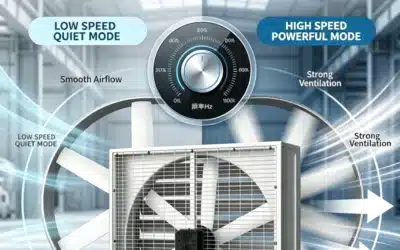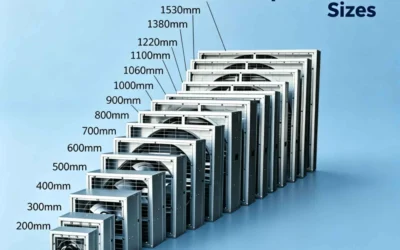
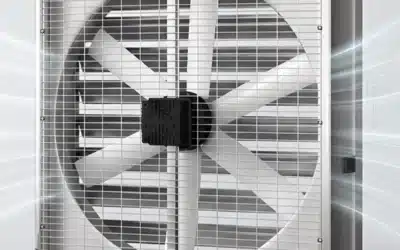
Introduction An industrial exhaust fan does not always need to operate at maximum speed. A factory may require high ventilation during the hottest part of the afternoon but much less airflow during cooler periods. This is where variable-speed exhaust fans can provide...
Industrial Ventilation & Cooling
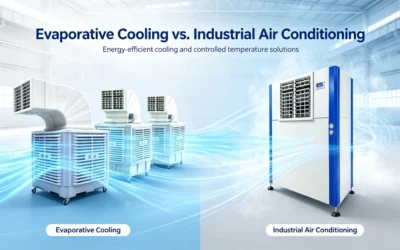
Evaporative Cooling vs. Industrial Air Conditioning
Evaporative cooling and industrial air conditioning can both reduce indoor temperatures, but they work in fundamentally different ways. The right choice depends on the building, climate, humidity, cooling objective and required level of temperature control. There is...
EC vs. Traditional AC Exhaust Fans: What Is the Difference?
Introduction Traditional AC exhaust fans have been widely used in factories, warehouses, workshops and agricultural buildings for many years. They are simple, robust and familiar to most facility managers. EC exhaust fans take a different approach. Instead of relying...
How to Choose an Industrial Evaporative Air Cooler
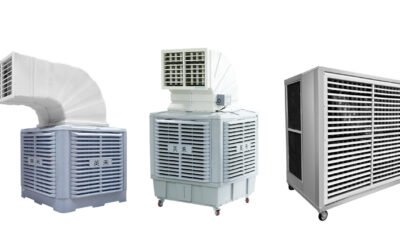
Industrial evaporative air coolers are not all designed for the same application. MX Cooling offers several approaches, including fixed industrial air coolers, portable industrial air coolers and integrated evaporative air coolers. The right choice depends on where...
Where Should Exhaust Fans Be Installed in a Factory?
Exhaust-fan location can have as much influence on ventilation performance as fan capacity. The objective is to remove unwanted air after it has passed through the area that needs ventilation. Identify the heat sources Start by identifying where heat is generated....
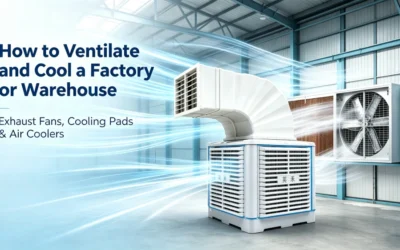
How to Ventilate and Cool a Factory or Warehouse
Large factories and warehouses often face the same basic problem: Heat enters or is generated inside the building faster than it can be removed. Machinery, production processes, people, lighting, solar heat and outdoor temperatures can all contribute to uncomfortable...
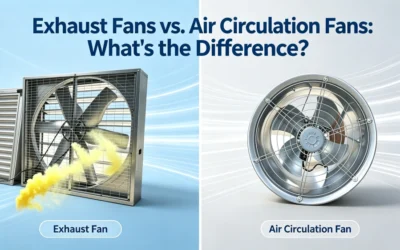
Exhaust Fans vs. Air Circulation Fans: What’s the Difference?
Exhaust fans and air circulation fans both move air, but they perform different jobs. The simplest distinction is: An exhaust fan removes air from a building. An air circulation fan moves air within the building. Understanding this difference can help when planning...
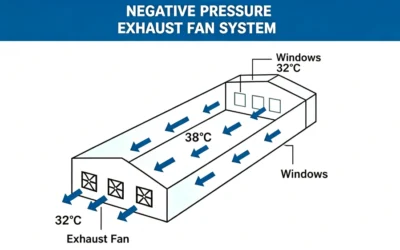
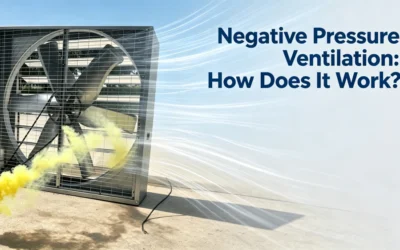
Negative Pressure Ventilation: How Does It Work?
Negative pressure ventilation is a simple and effective way to control airflow through a large building. In simple terms, exhaust fans remove air from the building, creating a slight pressure difference that draws replacement air in through designated openings. The...
Why a High-Airflow Exhaust Fan May Still Perform Poorly
A common assumption is: "If the fan has a high airflow rating, it must provide good ventilation." Not necessarily. Rated airflow isn't the whole story A fan's published airflow is usually measured under a defined condition. Once installed, the fan may encounter...