

A common assumption is:
“If the fan has a high airflow rating, it must provide good ventilation.”
Not necessarily.
Rated airflow isn’t the whole story
A fan’s published airflow is usually measured under a defined condition.
Once installed, the fan may encounter resistance from:
- shutters
- louvers
- screens
- ducts
- filters
- building openings
- pressure differences
The operating airflow can therefore be lower than the headline number.
The building can also be the problem
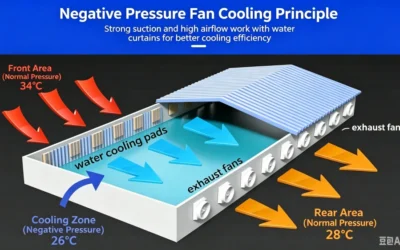
Imagine a factory with powerful exhaust fans but insufficient fresh-air openings.
The fans are trying to remove air, but replacement air cannot enter freely.
The result may be lower-than-expected ventilation performance.
Airflow direction matters too
Even a powerful system can perform poorly if air takes the wrong route.
If fresh air enters close to the exhaust fan, it may leave immediately instead of traveling through the working area.
More airflow isn’t always the solution
Before upgrading to a larger fan, check:
- Are sufficient air inlets provided?
- Are the inlets positioned correctly?
- Are the exhaust fans located where heat accumulates?
- Is there excessive resistance?
- Is the required airflow actually reaching the occupied zone?
Good ventilation is a system problem, not simply a fan-size problem.
0条评论