
Efficient Ventilation & Cooling for Livestock
Enhancing Comfort in Dairy and Cattle Barns
Discover how our advanced ventilation systems optimize airflow and improve animal welfare in large-scale livestock operations.
Challenges in Livestock & Poultry Ventilation
-
Managing Heat Stress in Poultry Houses
-
Improving Air Quality for Livestock Health
-
Ensuring Consistent Airflow in Barns
-
Reducing Energy Costs in Large Facilities
-
Maintaining Optimal Humidity Levels
-
Customizing Solutions for Varied Climates
-
Addressing Environmental Regulations
Application Examples

Dairy / Cattle Barn
Large-Scale Air Circulation for Cattle
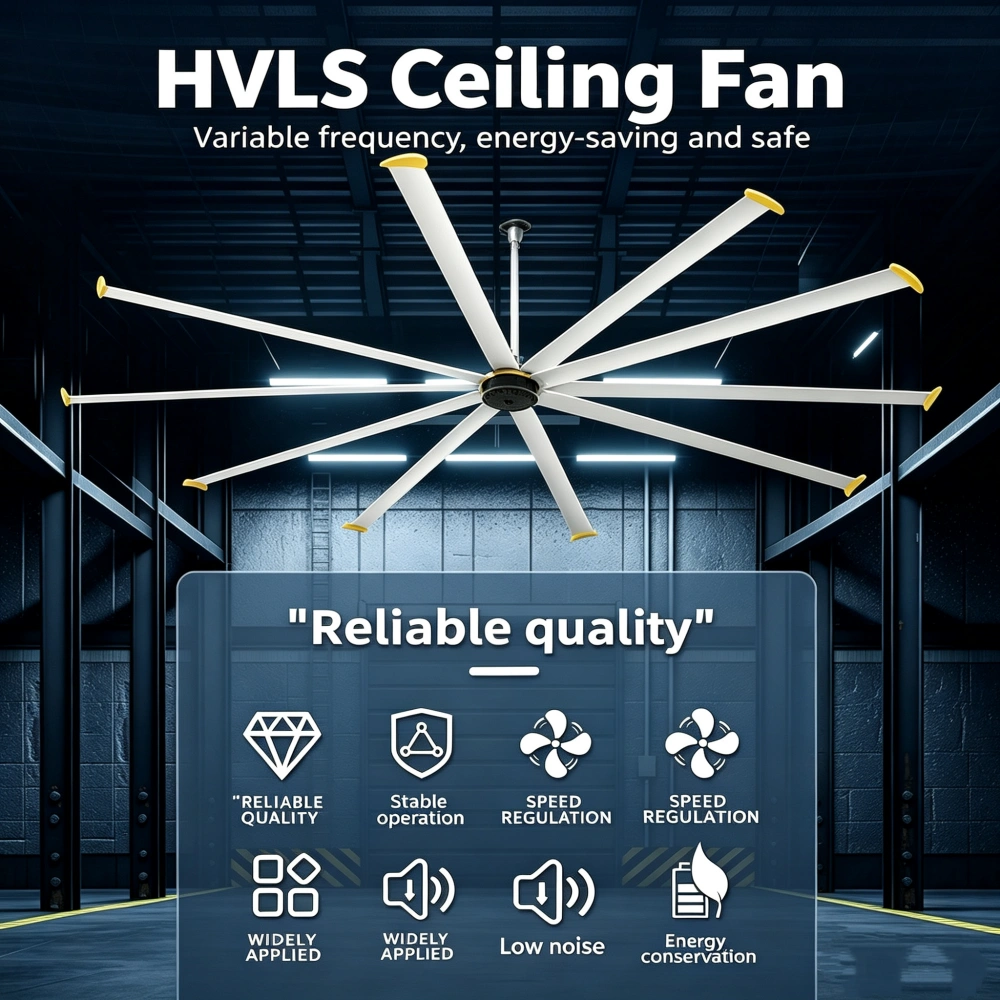
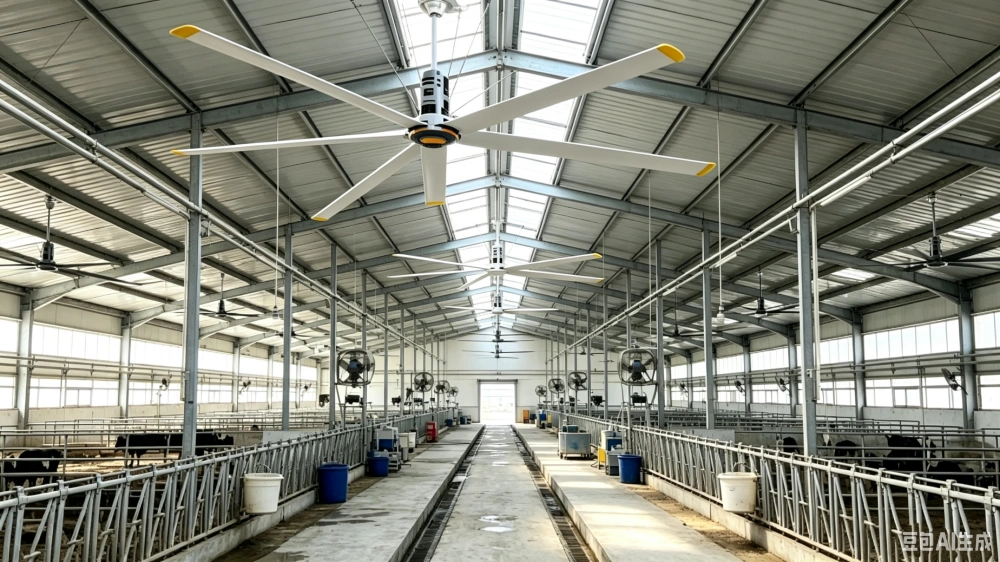
One cattle-farm application used large industrial ceiling fans to improve airflow through the barn.
The ceiling fans’ diameters are up to 7.3 m and have an approximate effective coverage area of 1,000–1,600 m² per fan for that particular project. The fans were installed above the working area to create broad, low-speed air movement.
The airflow was designed to move downward and then horizontally across the floor area, helping create broader air circulation rather than a concentrated high-speed airflow.
MX Cooling application experience:
Large livestock buildings often benefit from high-volume, low-speed air movement where the primary objective is animal comfort and air circulation.
Relevant MX Cooling solutions:
HVLS Ceiling Fans · Hanging Fans · Exhaust Fans
Poultry House
Cooling Pads + Negative-Pressure Exhaust Fans
A documented poultry application used a wet cooling-pad wall, negative-pressure exhaust fans and an environmental controller.
Outdoor air was drawn through the wet cooling pads by the exhaust fans. As the air passed through the wetted pad surface, evaporation reduced the incoming air temperature before it entered the poultry house. The warmer, humid indoor air was then exhausted outside.
The system therefore creates a clear airflow sequence:
Outdoor air → Cooling pads → Poultry house → Exhaust fans → Outside
MX Cooling application experience:
This is a classic example of how evaporative cooling and negative-pressure ventilation can work as one integrated system.
Relevant MX Cooling solutions:
Negative Pressure Exhaust Fans · Cooling Pads · Environmental/Control Systems
Pig / Livestock Housing
Ventilation for Heat and Air-Quality Management
Livestock housing needs to manage more than temperature.
Ventilation can also help control:
- humidity
- stale air
- odors
- accumulated heat
- airborne contaminants
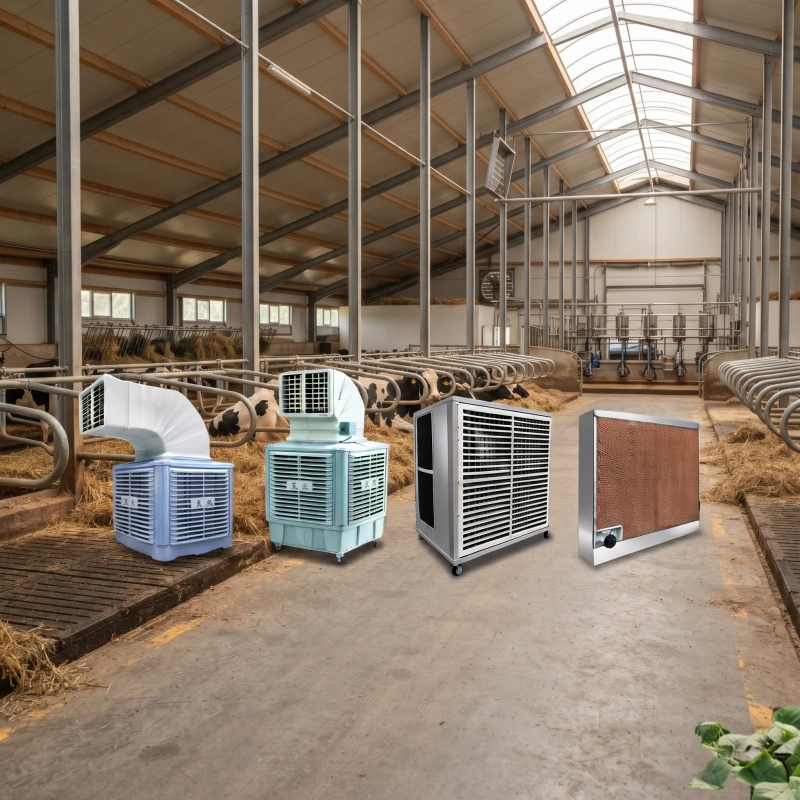
For livestock buildings where temperature reduction is also required, exhaust ventilation can be combined with evaporative cooling.
MX Cooling application experience:
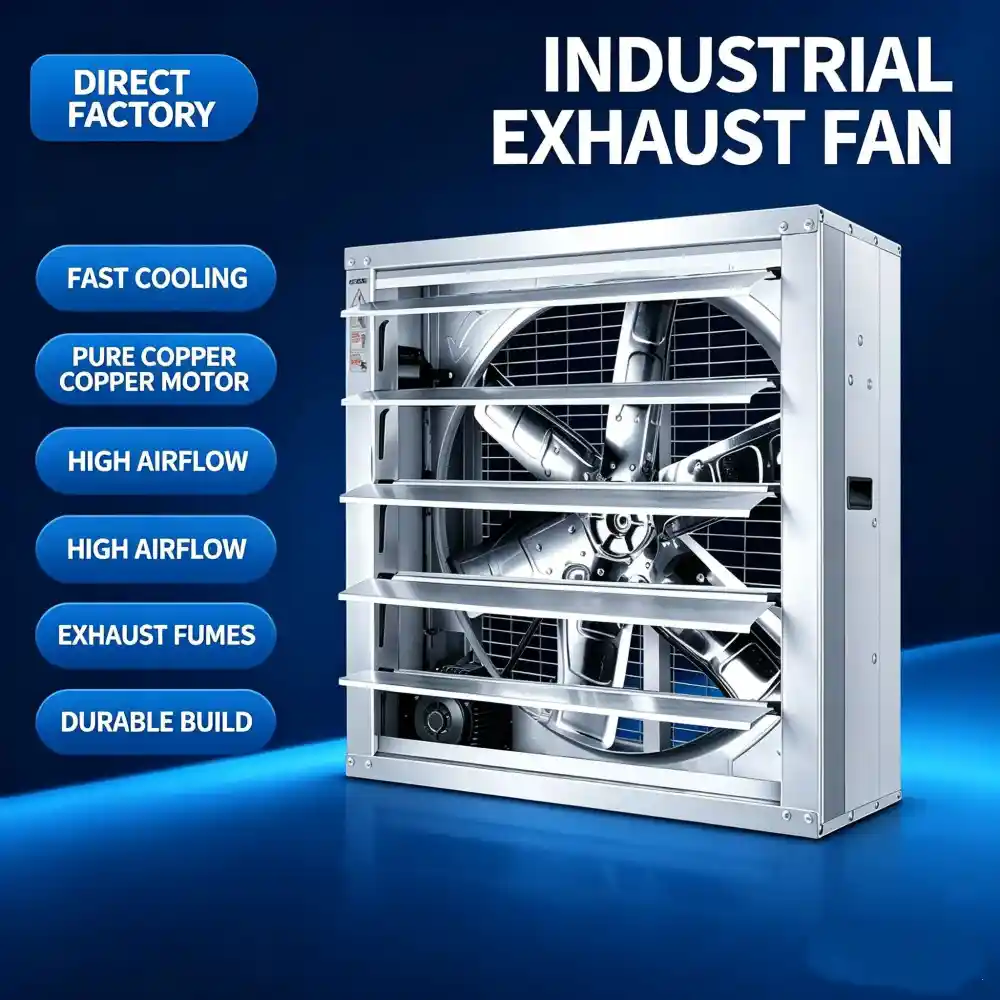
The correct system depends on the animal type, building design, climate and required ventilation rate. Exhaust fans should therefore be designed as part of the overall airflow system rather than selected independently.
Relevant MX Cooling solutions:
Negative Pressure Exhaust Fans · Cooling Pads · Air Circulation Fans
System Selector Guide
What are you trying to solve?
Remove hot/stale air
Efficiently expels hot and stale air, ensuring a cooler and more comfortable environment in large industrial spaces.
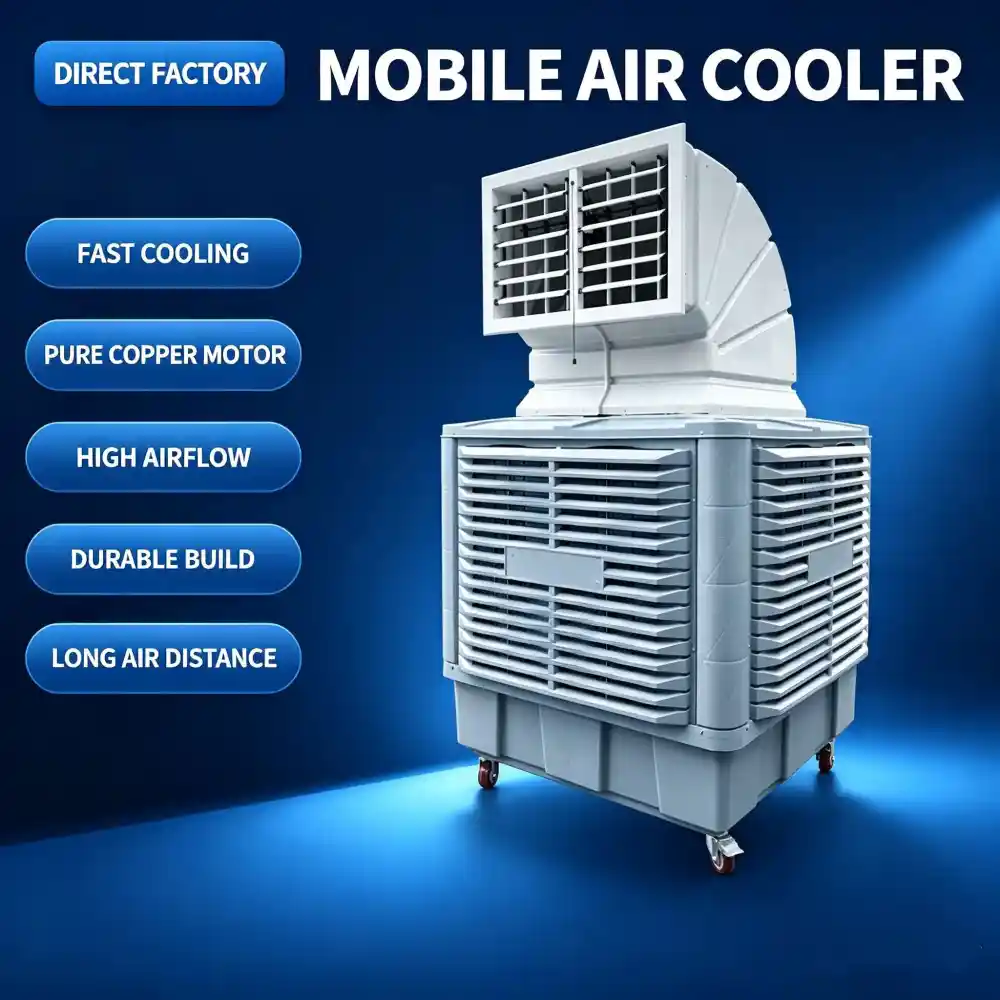
Cool a specific work area
Offers targeted cooling solutions for specific workstations or smaller areas within a facility.
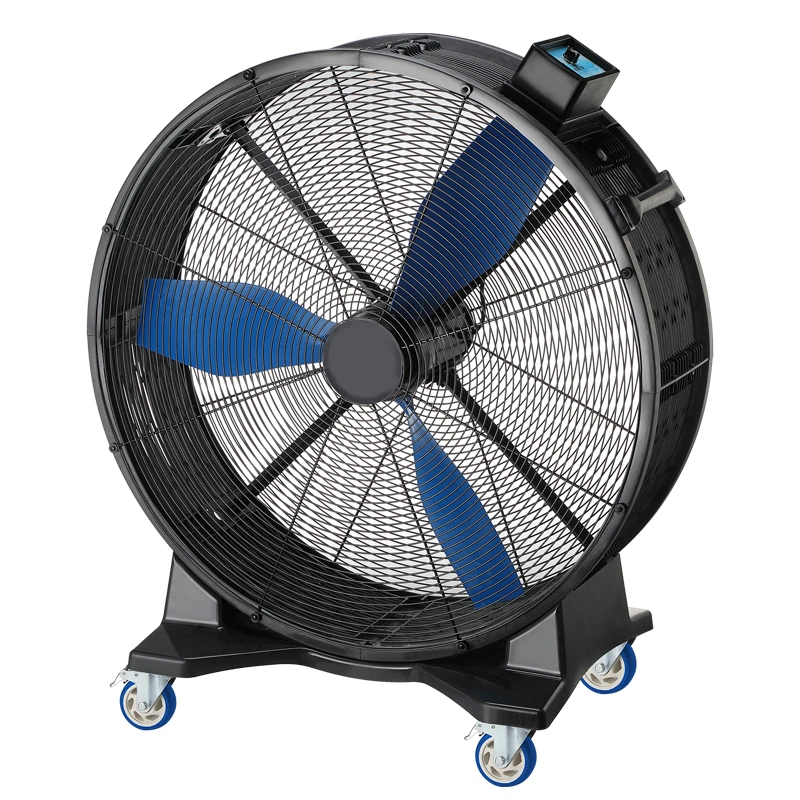
Remove hot/stale air
Enhances airflow throughout the building, reducing heat accumulation and improving air quality.
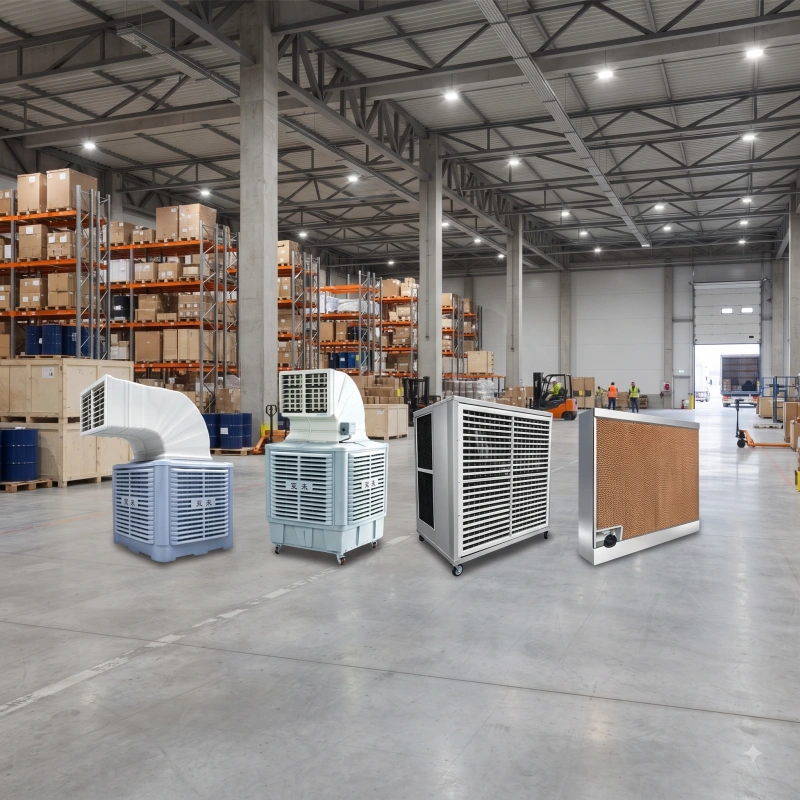
Need controlled temperature
Combines cooling and ventilation to optimize air quality and temperature control.
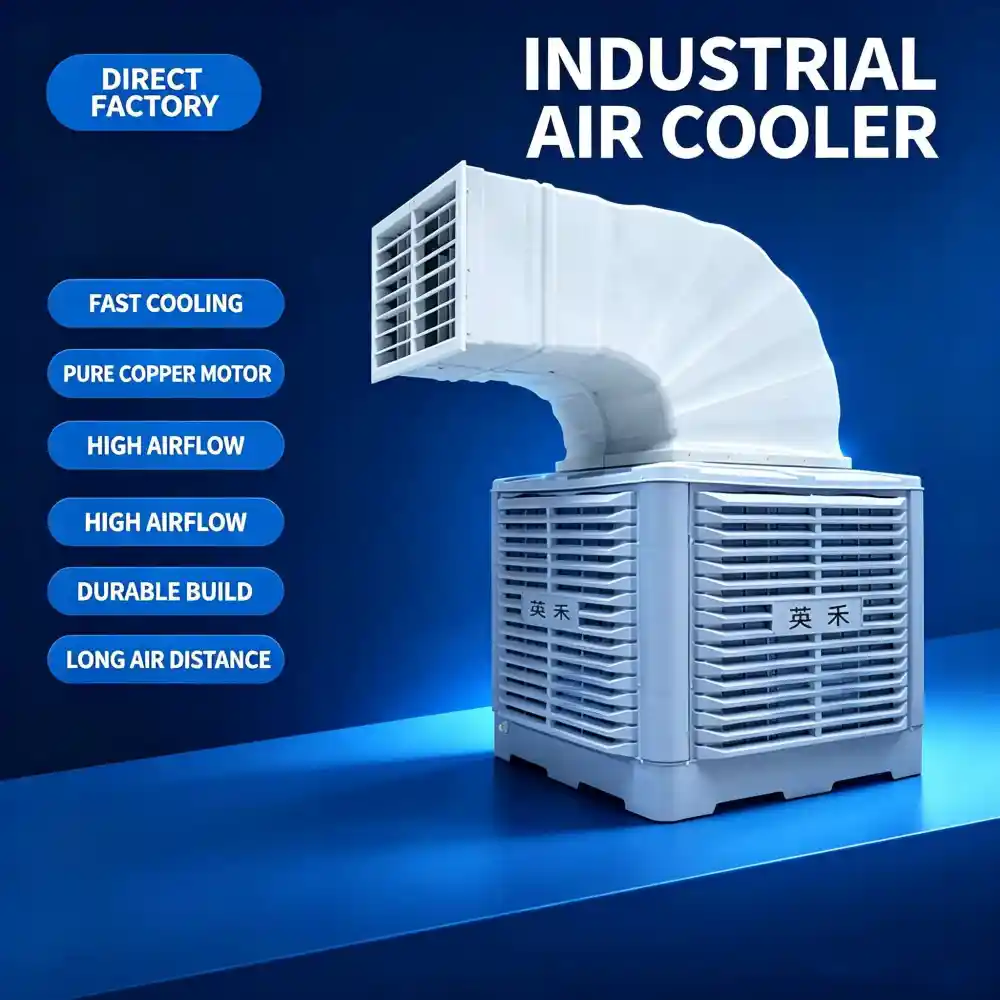
Cool a large open space
Provides large-scale cooling with fresh air delivery, ideal for expansive open areas.
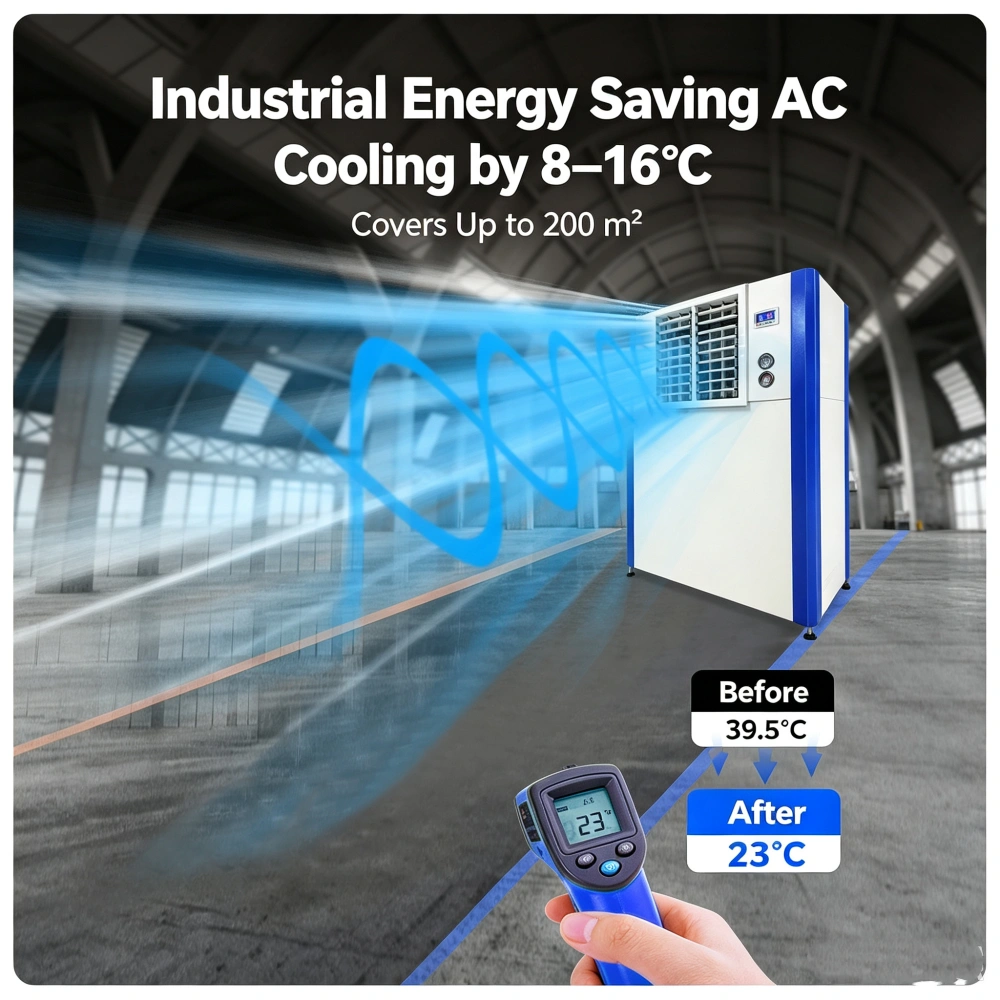
Need controlled temperature
Delivers precise temperature regulation for environments requiring stringent climate control.

Ventilation Insights
Livestock & Poultry Ventilation Knowledge
Explore our comprehensive guide to effective ventilation strategies for livestock and poultry facilities. Learn how to enhance airflow, manage heat stress, and improve overall animal welfare with our advanced ventilation solutions.
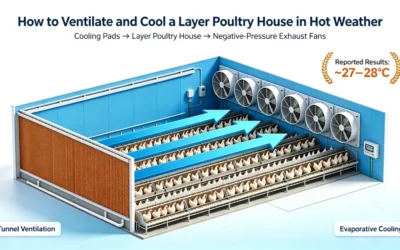
How to Ventilate and Cool a Layer Poultry House in Hot Weather
Why Summer Ventilation Matters in Layer Houses Layer poultry houses can experience significant environmental challenges during hot weather. High temperatures, high stocking density, humidity and insufficient airflow can create heat-stress conditions and affect...
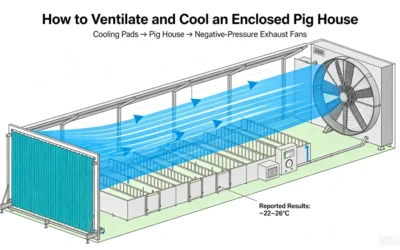
How to Ventilate and Cool an Enclosed Pig House
Why Enclosed Pig Houses Need Controlled Ventilation Enclosed pig houses provide greater control over the production environment, but they also reduce the amount of natural air exchange available to the animals. During hot weather, heat and moisture can accumulate...
Your Ventilation Questions Answered
Discover solutions to common inquiries about our livestock ventilation and cooling systems.
How do HVLS fans benefit livestock facilities?
HVLS fans improve air circulation, reduce heat stress, and enhance overall comfort for livestock, leading to healthier animals and increased productivity.
What is the energy consumption of your cooling systems?
Our systems are designed for energy efficiency, utilizing advanced technology to minimize power usage while maximizing cooling performance.
Can your systems be customized for specific needs?
Yes, we offer tailored solutions to meet the unique requirements of each facility, ensuring optimal performance and efficiency.
What maintenance is required for your cooling systems?
Regular maintenance includes cleaning filters, checking fan blades, and ensuring all components are functioning properly to maintain peak performance.
Are your products environmentally friendly?
Our products are designed with sustainability in mind, using eco-friendly materials and energy-efficient technologies to reduce environmental impact.
How can I request a quote for your solutions?
You can easily request a quote by filling out our online form or contacting our sales team directly for personalized assistance.
Optimize Your Livestock Environment
Enhance the comfort and productivity of your livestock with our advanced ventilation and cooling solutions. Our high-volume, low-speed fans are designed to ensure optimal airflow, reducing heat stress and improving air quality in large-scale barns and poultry houses.