

When people first encounter evaporative cooling, a natural assumption is that colder water should produce colder air.
That leads to a common idea:
“Why not add ice to the cooler?”
The problem is that evaporative cooling does not primarily depend on making the water cold.
Its main cooling mechanism is evaporation.
How Evaporative Cooling Actually Works
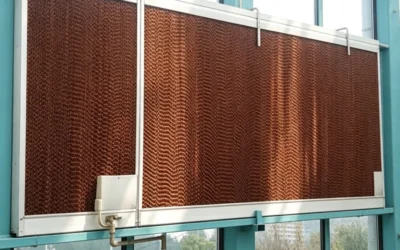
Hot outdoor air passes through a wet cooling pad.
At the pad:
Hot air + water evaporation →heat absorption →cooler air
Water changes from liquid to vapor. The energy required for this phase change comes largely from the surrounding air, reducing the air’s dry-bulb temperature.
The important process is therefore the evaporation of water, not simply the temperature of the water sitting in the tank.
Why Cold Water Is Not the Main Objective
Suppose an evaporative cooler has excellent water circulation but poor evaporation.
Making the water colder does not automatically solve the underlying problem.
The important questions are:
• Can air pass effectively through the wet pad?
• Is enough water exposed to the moving air?
• Is the pad clean?
• Is water distributed evenly?
• Is outdoor humidity low enough for effective evaporation?
• Is the cooled air being distributed properly?
These factors can have a much greater influence on system performance.
Think About Your Own Body
Sweating is a familiar example.
Your body does not cool itself simply because sweat is cold.
Cooling occurs when sweat evaporates.
The evaporation removes heat from your skin.
An evaporative air cooler uses the same basic physical principle on a larger scale.
What Happens If You Add Ice?
Adding ice may temporarily reduce water temperature, but it does not fundamentally change the operating principle.
The cooler still needs water to evaporate.
If the real problem is:
• high humidity
• blocked cooling pads
• poor water distribution
• insufficient airflow
• poor air distribution
• inadequate exhaust
then adding ice does not address the underlying problem.
Focus on Evaporation, Not Just Water Temperature
For industrial cooling, a better approach is to optimize:
1. Cooling-pad design
2. Water distribution
3. Airflow
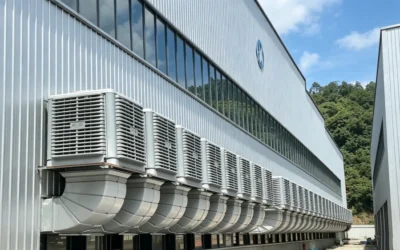
4. Air distribution
5. Exhaust and air replacement
6. Operating conditions
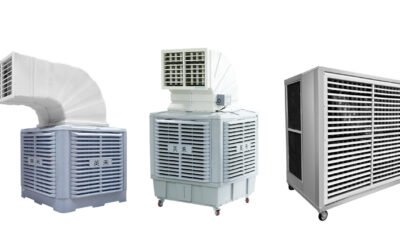
This is why evaporative cooling should be evaluated as a complete system.
Final Takeaway
The fundamental question is not:
“How cold is the water?”It is:
“How effectively can water evaporate while air passes through the cooling system?”That distinction helps explain why proper cooling-pad design, airflow and ventilation are so important to industrial evaporative cooling.
0 Comments