

Why Replace Diesel Ventilation Fans?
Some poultry farms use diesel-powered ventilation equipment where reliable electrical ventilation capacity is unavailable or where older equipment was installed before an electric system became practical.
However, diesel-powered ventilation can introduce several operating considerations:
- Fuel consumption
- Fuel storage
- Noise
- Engine maintenance
- Exhaust emissions
- Manual operating requirements
Replacing diesel equipment with electric exhaust fans can change the operating model of the ventilation system.
Electric Exhaust Fans for Tunnel Ventilation
Electric exhaust fans can be used as part of a tunnel ventilation system.
The basic arrangement is:
Air Inlet → Poultry House → Electric Exhaust Fans → Outside
When evaporative cooling is included:
Cooling Pads → Poultry House → Electric Exhaust Fans → Outside
The exhaust fans create the airflow through the building.
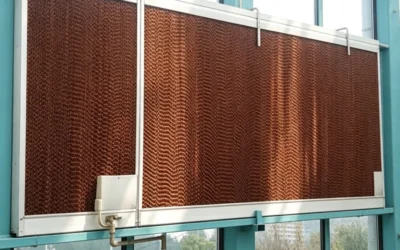
The cooling pads treat the incoming air before it enters the poultry house.
What Changes When a Farm Moves From Diesel to Electric?
The most obvious change is the energy source.
Diesel system
Diesel fuel → Engine → Fan → Airflow
Electric system
Electricity → Motor → Fan → Airflow
The change can affect:
- Operating cost
- Maintenance requirements
- Noise
- Automation
- Emissions at the fan location
- Daily operating procedures
The actual economic benefit depends on local fuel and electricity prices and the operating schedule.
Application Reference: 20,000-Broiler Farm in Vietnam
Application
20,000-broiler farm.
Original Challenge
The farm previously used diesel-powered ventilation fans.
The application reference identifies:
- Fuel consumption
- Noise
- Maintenance requirements
- Exhaust emissions
as disadvantages of the existing system.
Referenced Solution
The ventilation system was upgraded to:
Electric Negative-Pressure Exhaust Fans + Evaporative Cooling Pads
The system used tunnel ventilation.
System Concept
Evaporative Cooling Pads → Broiler House → Electric Exhaust Fans
Reported Results
The supplied application reference reports:
- Inlet-air cooling effect of up to approximately 9°C
- Cooling-related operating cost reduction from approximately US$650 to US$52 per month
- Reported payback period of approximately 3 months
- Reduced maintenance requirements
- Removal of diesel exhaust emissions from the ventilation fans
These numbers should be presented as reported figures from the referenced application.
They should not be treated as guaranteed results for another farm.
Why the Energy Comparison Needs to Be Done Carefully
A diesel-to-electric conversion should not be evaluated only by comparing fuel price with electricity price.
The complete operating cost should be considered.
Existing diesel system
Calculate:
- Fuel consumption
- Fuel cost
- Engine maintenance
- Oil and filter requirements
- Operating hours
- Replacement costs
Proposed electric system
Calculate:
- Fan motor power
- Electricity consumption
- Operating hours
- Electricity price
- Maintenance
- Installation cost
- Expected service life
Then compare the annual operating cost of both systems.
Example Payback Calculation
The basic concept is:
Annual operating savings = Existing operating cost − New operating cost
Then:
Payback period = Investment cost ÷ Annual operating savings
The actual calculation should include the complete ventilation system and not just the fan purchase price.
If the referenced Vietnam project reports a three-month payback, that figure should remain clearly identified as a project-reported result.
Why Electric Fans Can Make Automation Easier
Electric exhaust fans can be integrated into control systems designed for poultry ventilation.
Depending on the equipment selected, the system may use:
- ON/OFF control
- Multiple fan stages
- Variable-speed operation
- Temperature sensors
- Humidity sensors
- Automatic schedules
This can reduce the amount of manual intervention required.
The exact control capabilities depend on the selected motor and control system.
Can Electric Exhaust Fans Work With Evaporative Cooling?
Yes.
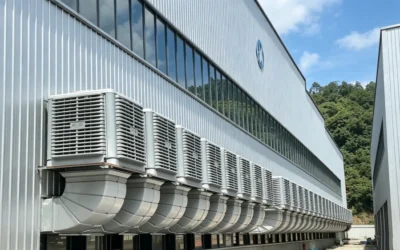
Electric exhaust fans can form the exhaust side of a tunnel ventilation system using evaporative cooling pads.
The basic airflow path is:
Outside Air
↓
Evaporative Cooling Pads
↓
Poultry House
↓
Electric Exhaust Fans
↓
Outside
The fans pull outside air through the wet cooling media and across the building.
The effectiveness of the system depends on correct fan capacity, inlet design, cooling-pad area and operating conditions.
What Should Be Checked Before Replacing Diesel Fans?
1. Required airflow
Determine how much airflow the poultry house actually requires.
2. Available electrical supply
Confirm that the electrical infrastructure can support the proposed fan system.
3. Fan capacity
Compare fan performance under actual operating pressure.
4. Air inlet
Make sure the inlet system can support the required airflow.
5. Cooling pads
If evaporative cooling is being used, check pad size, condition and water distribution.
6. Controls
Decide whether the system requires:
- Manual operation
- Automatic temperature control
- Fan staging
- Variable speed
7. Operating cost
Compare diesel and electricity costs using actual local prices and operating hours.
What About Noise?
Noise can come from several sources:
- Motor
- Fan blades
- Airflow
- Vibration
- Building structure
- Engine operation in diesel systems
Replacing diesel engines with electric motors can eliminate engine-related noise, but the complete fan system should still be evaluated for acoustic performance.
What About Maintenance?
Diesel engines generally require engine-related maintenance that does not apply to a simple electric motor system.
However, electric ventilation equipment still requires maintenance.
Operators should inspect:
- Fan blades
- Bearings
- Motor
- Shutters
- Guards
- Electrical connections
- Cooling pads
- Water pumps
- Control equipment
An electric system should therefore be described as lower-maintenance in some areas, rather than maintenance-free.
Final Takeaway
Replacing diesel-powered ventilation with electric exhaust fans can be considered when a poultry farm wants to reduce dependence on fuel-powered ventilation and move toward a more automated electric system.
The conversion should be evaluated using the farm’s actual:
- Fan capacity
- Operating hours
- Fuel consumption
- Electricity price
- Maintenance cost
- Building dimensions
- Cooling requirements
The Vietnam application reference demonstrates one reported example of this type of upgrade, but the economic result will vary significantly between farms.
0 Comments