

An exhaust fan can only remove air effectively if replacement air has somewhere to come from.
This simple principle is often overlooked.
Exhaust and intake work together
When an exhaust fan removes air from a building, replacement air must enter through openings.
Those openings may include:
- windows
- doors
- wall louvers
- dedicated air inlets
- evaporative cooling units
If the openings are too small or poorly positioned, the ventilation system may not perform as intended.
Air inlet location matters
The objective is to make incoming air travel through the space before reaching the exhaust fan.
For example:
Fresh air → workers → machinery/heat zone → exhaust
is usually more useful than:
Fresh air → exhaust fan
What happens with inadequate inlets?
The system may experience increased resistance and reduced airflow.
The fan may also create strong local suction near the inlet while other parts of the building remain poorly ventilated.
Cooling systems can become the air inlet
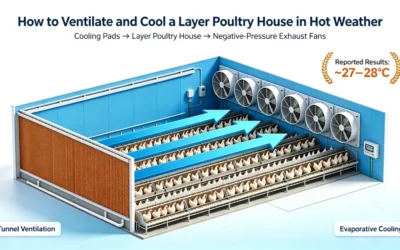
In a combined evaporative-cooling system, cooled air can be introduced through the cooling units while exhaust fans remove hot indoor air.
The source material describes this type of combined approach for hot industrial spaces where ventilation and cooling are both required.
The takeaway
When planning an exhaust-fan system, don’t ask only:
“How many exhaust fans do I need?”
Also ask:
“Where will the replacement air come from?”
That question can dramatically change the design.
0 Comments