
Efficient Ventilation for Poultry Houses
Poultry House Ventilation & Cooling Equipment
Ventilation and cooling equipment for broiler and layer houses, including negative-pressure exhaust fans, tunnel ventilation and evaporative cooling systems.
Exhaust Fans • Tunnel Ventilation • Evaporative Cooling • Equipment Recommendations
Poultry House Ventilation: From Air Intake to Exhaust
Poultry houses need controlled air movement to remove heat, moisture and stale air while maintaining suitable indoor conditions for the poultry.
System Diagram
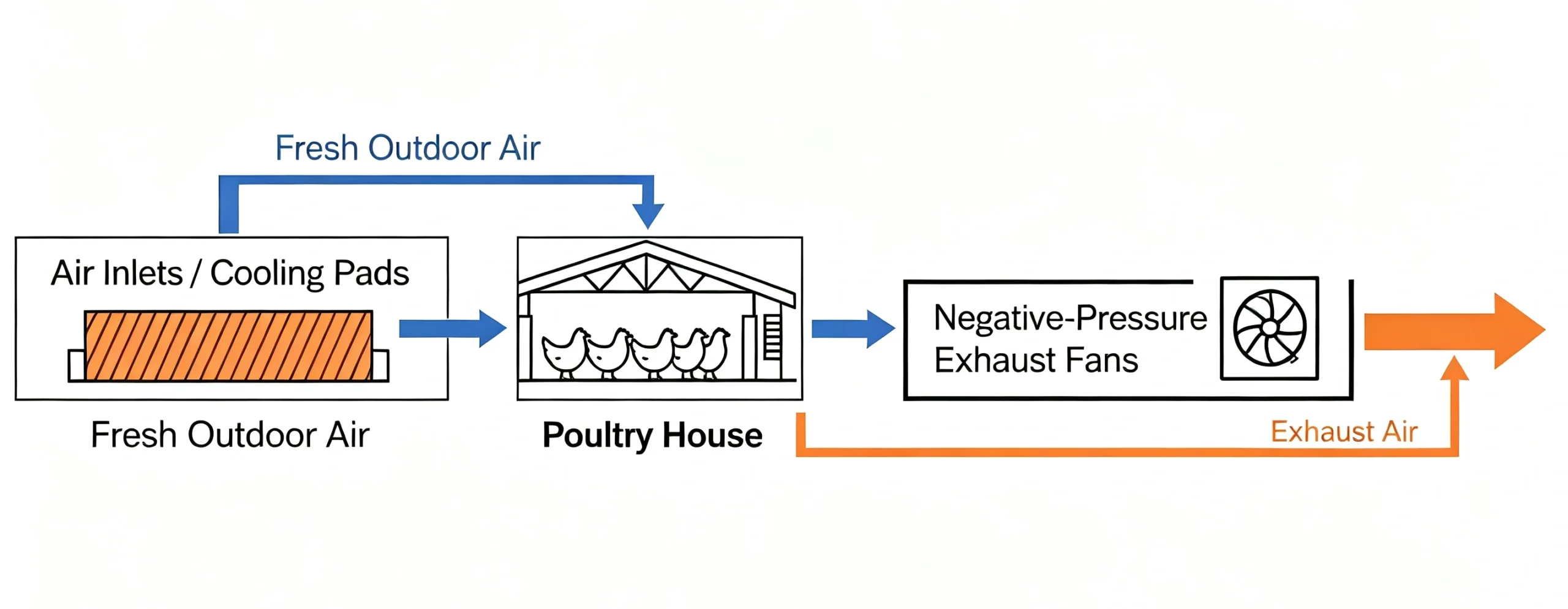
Negative-pressure ventilation uses exhaust fans to remove air from the poultry house. The resulting pressure difference draws replacement air through designated air inlets or evaporative cooling pads.
In hot conditions, tunnel ventilation moves a large volume of air longitudinally through the house. When combined with evaporative cooling pads, the incoming air can be cooled before entering the poultry house when outdoor conditions are suitable.
Why Choose FRP Exhaust Fans?
Discover the Advantages of FRP Fans
Corrosion Resistance
FRP fans are engineered to withstand environments where moisture and corrosive elements can compromise traditional metal fans, ensuring longevity and reliability.
Suitable for Harsh Conditions
Designed for demanding industrial settings, FRP fans excel in providing robust ventilation solutions in challenging environments.
Minimized Metal Corrosion Concerns
While not universally corrosion-proof, FRP fans offer significant resistance to corrosion, reducing maintenance needs and extending service life.
Tailored Construction Options
Our fans can be customized to match specific operational environments, ensuring optimal performance and efficiency in various applications.
Why Choose FRP Exhaust Fans?
Discover the unparalleled advantages of FRP exhaust fans, specifically designed to meet the rigorous demands of industrial environments. Our fans offer superior performance, durability, and efficiency, making them the ideal choice for your ventilation needs.
Application-Specific Construction
Our FRP fans are meticulously engineered to align with the unique requirements of your operational environment. By selecting the appropriate materials and construction methods, we ensure optimal performance and longevity, even in the most challenging conditions.
Industrial Ventilation Excellence
Positioned as the ultimate solution for industrial ventilation, our FRP fans are crafted to handle large-scale air movement efficiently. They are perfect for factories, warehouses, and other industrial settings, providing reliable and consistent airflow.
Custom / Project Requirements
At MX Cooling, we understand that every project is unique. Our team is ready to collaborate with you to customize fan configurations that meet your specific application requirements, ensuring maximum efficiency and effectiveness.
Corrosion Resistance
FRP fans are built to withstand environments where moisture and corrosive elements are prevalent. This resistance to corrosion significantly reduces maintenance needs and extends the service life of the equipment, providing a cost-effective solution for your ventilation needs.
Why Choose FRP Exhaust Fans?
FRP (Fiberglass Reinforced Plastic) exhaust fans offer a range of benefits tailored to industrial environments. Their unique construction makes them ideal for applications where traditional materials may fall short. Discover how these fans can enhance your operations with their specialized features.
01
Corrosion Resistance
02
Suitable for Demanding Environments
03
Reduced Metal Corrosion Concerns
04
Application-Specific Construction
05
Industrial Ventilation
06
Custom / Project Requirements
When:
-
- Corrosive fumes are present
- Moisture or humid conditions are significant
- The exhaust environment may accelerate metal corrosion
- The application involves chemical or process exhaust
- Long-term corrosion resistance is an important equipment consideration
- The ventilation system operates in a demanding environment
When to Consider FRP Exhaust Fans
FRP exhaust fans are an excellent choice in environments where traditional metal fans may not suffice. These fans are particularly advantageous in settings where corrosive fumes are present, such as chemical processing plants or facilities with high moisture levels. The durability of FRP materials ensures long-term performance even in the most demanding conditions, making them a reliable option for industrial ventilation needs.
Key Considerations for FRP Fan Selection
Before selecting an FRP exhaust fan, it’s crucial to evaluate your specific requirements. Consider the types of substances present in the exhaust air, the operating temperature, and the required airflow and static pressure. Additionally, assess whether the fan will handle fumes, vapor, moisture, or particulate matter, and determine the installation and electrical requirements. These factors will guide you in choosing the most suitable fan for your application.
Considerations:
- What substances are present in the exhaust air?
- What is the operating temperature?
- What airflow is required?
- What static pressure is required?
- Is the fan handling fumes, vapor, moisture or particulate matter?
- What installation conditions apply?
- What electrical requirements are needed?
FRP material selection should be evaluated against the actual chemical environment, concentration, temperature and operating conditions.
Real-World Application
Agricultural Ventilation
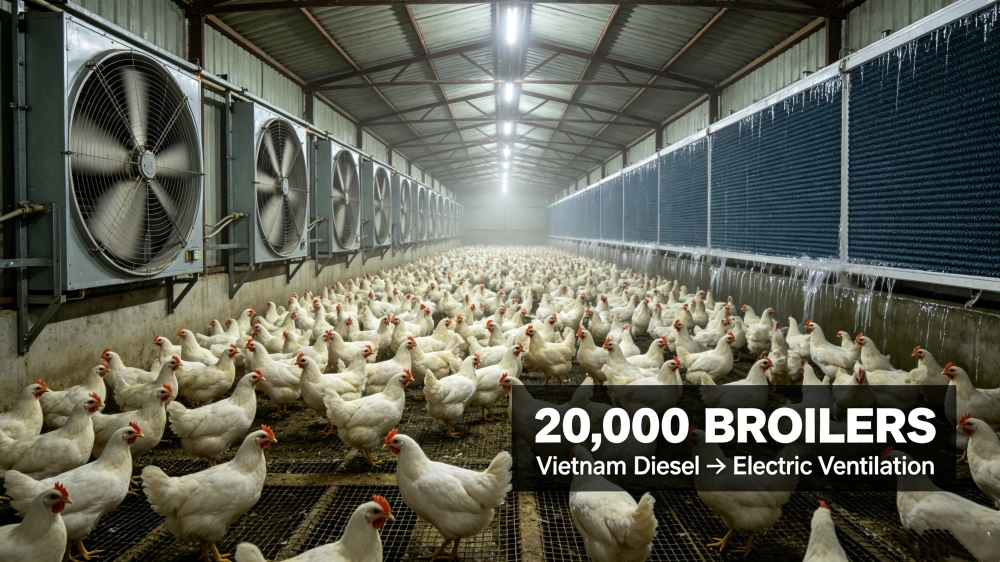
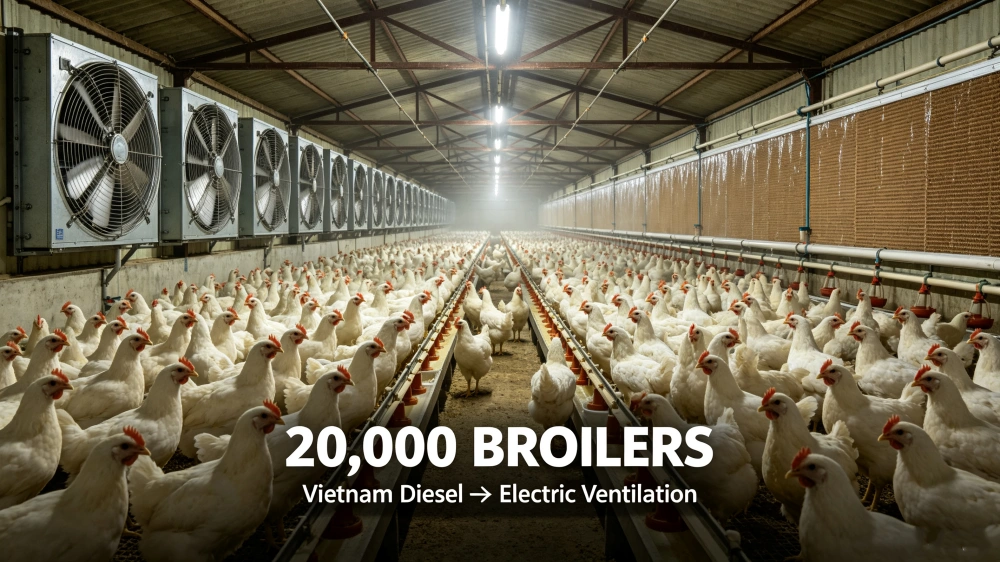
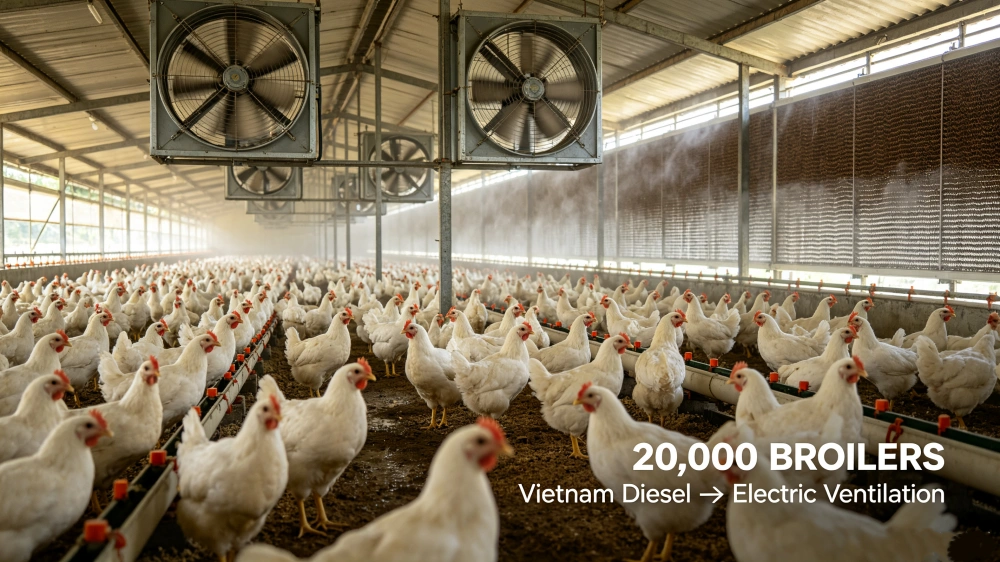
Broiler Farm Ventilation Upgrade — Vietnam
Application:
20,000-broiler farm
Challenge
The farm previously used diesel-powered ventilation fans. Fuel consumption, noise, maintenance requirements and exhaust emissions created operating disadvantages.
Solution
The ventilation system was upgraded to electric negative-pressure exhaust fans combined with evaporative cooling pads for tunnel ventilation.
Reported Results
- Reported inlet-air cooling effect of up to approximately 9°C
- Reported cooling-related operating cost reduction from approximately US$650 to US$52 per month
- Reported payback period of approximately 3 months
- Reduced maintenance requirements
- No diesel exhaust emissions from the ventilation fans
System Concept:
Evaporative Cooling Pads → Broiler House → Electric Exhaust Fans
What This Demonstrates
Replacing diesel-powered ventilation with electric exhaust equipment can address fuel consumption, noise and exhaust-emission issues while supporting tunnel ventilation and evaporative cooling.
Typical Applications for FRP Exhaust Fans
Chemical Processing
Wastewater Treatment
Metal Processing and Plating
Industrial Manufacturing
Corrosive-Fume Exhaust
Process Ventilation
Industrial Workshops
Other Corrosive or High-Moisture Environments
Essential Poultry Ventilation Equipment
Poultry Exhaust Fans
Designed for high-volume air extraction, these fans are crucial for maintaining negative-pressure and tunnel ventilation systems in poultry houses.
EC / Variable-Speed Exhaust Fans
These electronically controlled fans offer adjustable airflow, making them ideal for environments requiring precise ventilation control.
Evaporative Cooling Pads
These pads cool incoming air through evaporation, providing an efficient cooling solution when outdoor conditions permit.
HVLS Air Circulation Fans
High Volume Low Speed (HVLS) fans circulate air effectively within livestock buildings, enhancing air distribution without replacing exhaust systems.
Advanced Ventilation Solutions
Explore our range of cutting-edge ventilation solutions tailored to optimize air quality and temperature in poultry environments.
Custom Ventilation Systems
Our custom systems are designed to meet the specific needs of your poultry operation, ensuring optimal environmental conditions.
Energy-Efficient Fans
Our energy-efficient fan options help reduce operational costs while maintaining effective ventilation in poultry houses.
Durable Cooling Equipment
Built to withstand harsh conditions, our cooling equipment ensures long-lasting performance and reliability in poultry environments.
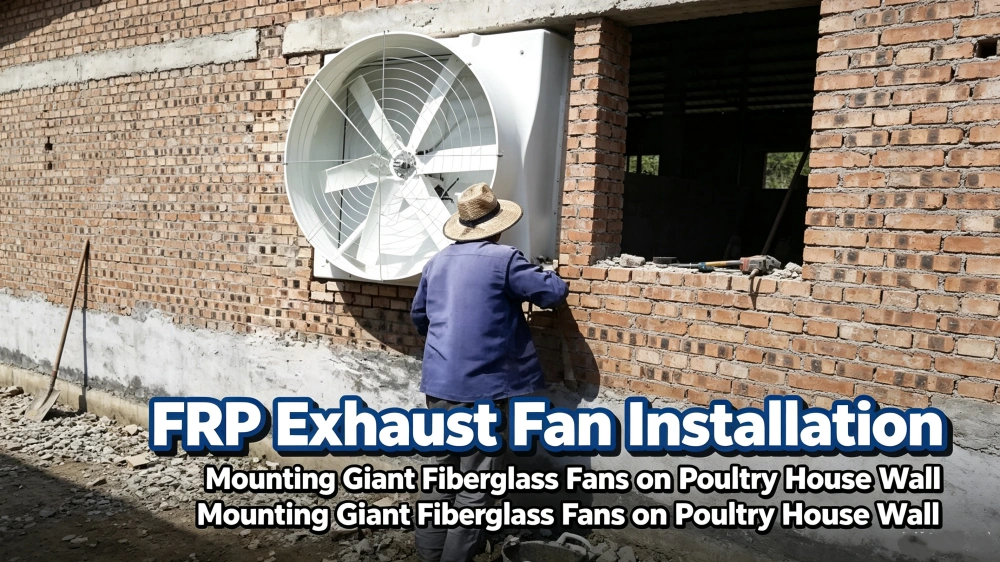
FRP Construction and Material Options
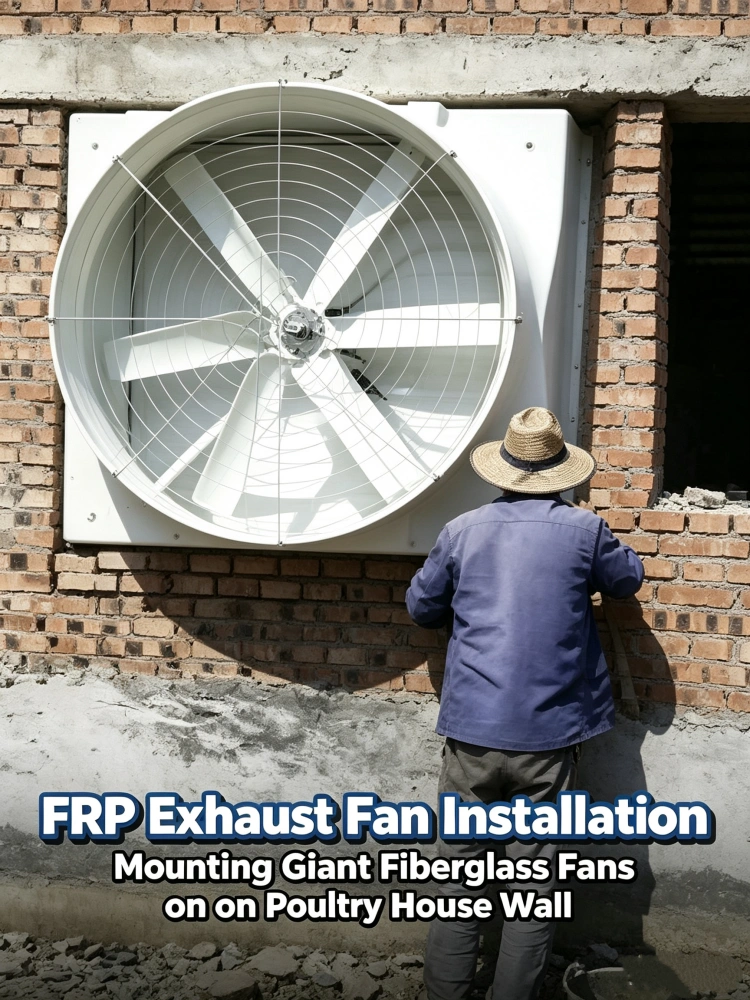
Discover the innovative construction techniques behind our FRP products, designed to meet the rigorous demands of industrial environments.
Our FRP housing is crafted to provide exceptional durability and resistance to harsh conditions.
The impeller and blade construction utilizes advanced materials to ensure optimal performance and longevity.
Reinforcement structures are meticulously engineered to enhance strength and stability, while our selection of shafts and hardware are chosen for their superior quality and reliability.
We prioritize resin and material selection to match the specific needs of your application, ensuring maximum efficiency and effectiveness.
Protective surface treatments are applied to further extend the lifespan of our products, making them a smart investment for your business.
Explore how our FRP solutions can transform your operations with unmatched reliability and performance.
FRP Exhaust Fan Specifications
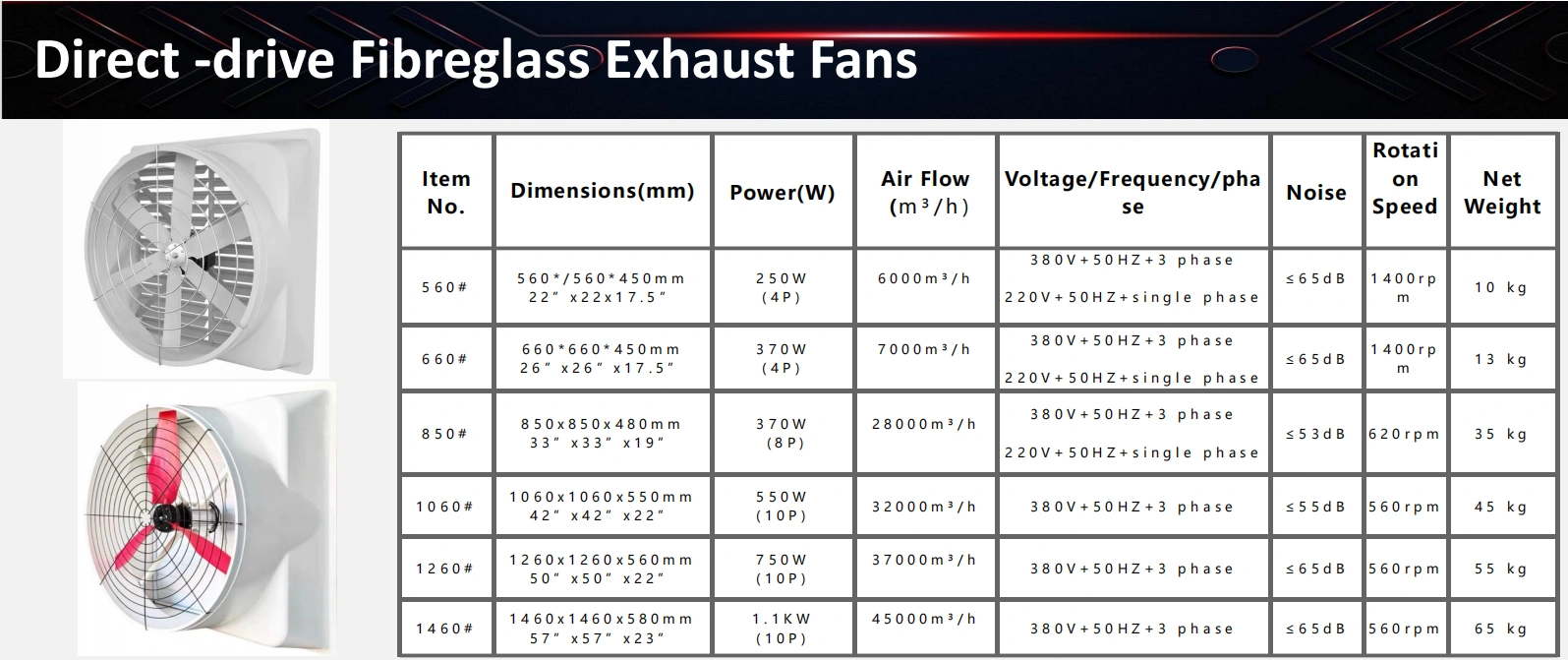
Need complete model-by-model specifications?
For detailed dimensions, model comparisons and technical specifications, please refer to the current MX Cooling product catalog.
How to Choose the Perfect FRP Exhaust Fan
Step 1
Define the Application
Identify the specific area or process that requires ventilation. Consider the environmental conditions and the purpose of the ventilation to ensure the right solution is selected.
Step 2
Determine Airflow Requirement
Calculate the necessary airflow to maintain optimal conditions. This involves understanding the volume of air that needs to be moved and the frequency of air changes required.
Step 3
Check System Resistance
Evaluate the resistance within the system, including ductwork, filters, and other components. This helps in selecting a fan that can overcome these resistances effectively.
Step 4
Confirm the Operating Environment
Gather detailed information about the operating environment, such as the presence of corrosive substances, temperature variations, and moisture levels. This ensures the fan is suitable for the conditions.
Step 5
Confirm Fan Configuration
Examine the fan’s specifications, including size, drive type, motor, electrical requirements, and construction materials. Ensure the configuration aligns with your system’s needs and installation setup.
Not sure which FRP fan you need?
Send us your application, required airflow if known, operating environment, quantity and electrical requirements. If you do not know the exact model, our team can review the information and recommend a suitable configuration.
Get Your Customized FRP Fan Quote
Ensure you have all the necessary details for an accurate FRP fan quotation. Our checklist includes application type, quantity, airflow requirements, static pressure, operating temperature, and more. If you’re unsure about any specifications, don’t worry. Provide us with your application details, building or process information, and any technical documents you have. Our team is here to assist you in identifying the remaining information needed.
Poultry House Ventilation FAQ
Our FAQ section addresses common concerns about poultry house ventilation, providing insights into system design, equipment selection, and operational benefits.
What is poultry house ventilation?
What is tunnel ventilation?
What is a negative-pressure exhaust fan?
What is the difference between broiler and layer ventilation?
How many exhaust fans does a poultry house need?
What information should I provide for a ventilation recommendation?
Related Industrial Exhaust Fan Solutions
Compare FRP with other exhaust fan configurations to find the construction best suited to your operating environment.
Schedule Your Consultation
Connect with our experts to discuss your poultry house ventilation needs. Book an appointment to explore tailored solutions that enhance your operations.
Request Your Customized Fan Recommendation
Ready to optimize your poultry house environment? Provide us with your project details, and we’ll recommend the most effective ventilation and cooling solutions to meet your needs.
